The Number You Signed Off On Isn't the Number You'll Pay (Unless You Plan For It)
You picked a lot, met with a builder, and landed on a number that felt manageable. Six months later, you're staring at change orders and wondering how a "$650,000 home" became a $760,000 home.
If that sounds familiar, you're not unusual. You're the majority. Custom home cost overruns are so common that the industry has quietly normalized them, and most homeowners only find out after they've already committed.
The data is blunt about it. An analysis of construction projects spanning 70 years across twenty countries found that 85% of construction projects experienced cost overrun, with an average overrun of 28%. On the residential side specifically, overruns tend to land closer to 10% to 20%, with location and finish selections being the biggest drivers.
Here's the part nobody wants to say out loud: most of those overruns were predictable. This post walks through where custom home budgets actually break, why it happens, and the specific moves that keep your project on the number you agreed to.
Why Custom Home Budgets Are Under More Pressure Than They Were Five Years Ago
Before we blame anyone, it helps to understand the baseline shift. Building is genuinely more expensive than it was, and not by a little.
According to North Carolina Housing Finance Agency analysis of Bureau of Labor Statistics data, construction costs are roughly 30% higher than they were five years ago. That's material and labor, not builder margin.
NAHB's Cost of Construction Survey shows the same squeeze from a different angle: construction costs made up 64.4% of the average new home's sales price in 2024, up from 60.8% in 2022. Hard costs are eating a bigger share of every dollar you spend.
So when a budget grows, part of it is market reality. But market reality is knowable and plannable. The overruns that actually hurt come from four specific gaps, and every one of them is manageable with better upfront work.
The Six Places Custom Home Budgets Actually Break
After enough projects, you start seeing the same line items show up as surprises. These are the repeat offenders.
- Site work and dirt conditions. This is the single biggest wildcard in custom building. Rock, high water tables, poor soil bearing, steep grades, long driveways, and septic system requirements can swing site costs by $15,000 to $80,000 or more. Nobody knows what's underground until someone digs or drills.
- Allowances set too low. An "allowance" is a placeholder dollar amount for something you haven't selected yet: flooring, lighting, plumbing fixtures, cabinets, countertops. If your builder writes a $12,000 lighting allowance and you fall in love with $28,000 worth of fixtures, that $16,000 is a real budget increase. Lowball allowances make an initial bid look competitive and guarantee a painful reckoning later.
- Design drift. Plans evolve. The bump-out breakfast nook, the taller ceilings in the great room, the extra bathroom, the wider garage. Each one seems small. Together they're routinely 5% to 10% of the contract price.
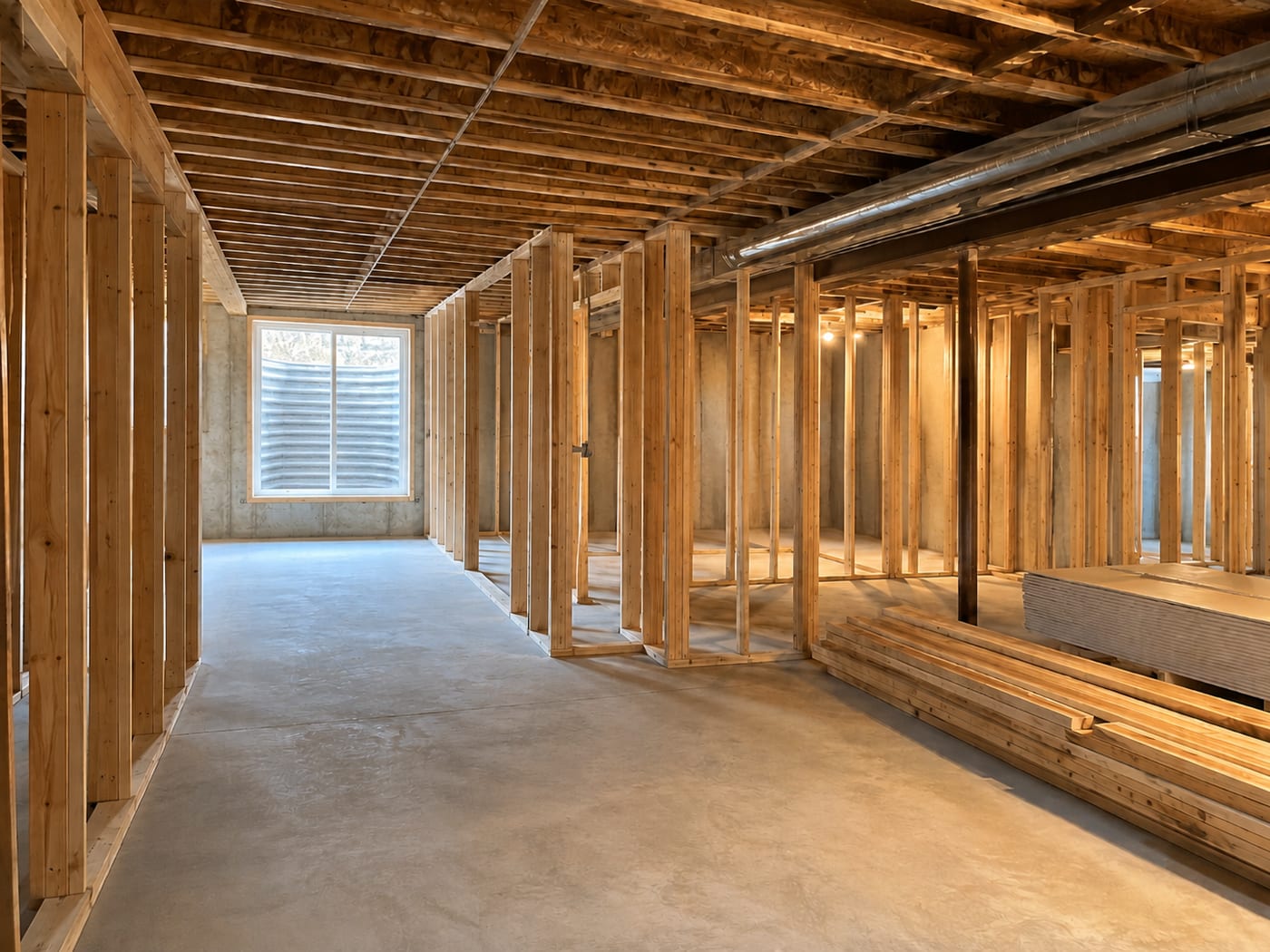
- Finish upgrades mid-build. Standing inside the framed shell changes how people think. Suddenly the tile you picked feels flat and the trim package feels thin. This is the most emotionally driven category of overrun, and it's also the most preventable.
- Schedule slippage. Time costs money. Every extra month means more construction loan interest, extended rent or temporary housing, and re-mobilization fees when trades have to come back a second time.
- Material escalation. Urban Land Magazine reported that North American construction cost inflation rose 4.69% year over year in Q4 2024, with tariff policy expected to push U.S. costs higher. On a 12 month build, that's real exposure on lumber, steel, copper, and imported finishes.
The Root Problem: Most Budgets Are Built Backward
Here's the pattern we see constantly. A homeowner gets a per square foot number early, multiplies it out, and treats that as the budget. Then design happens. Then selections happen. Then reality happens.
Per square foot pricing is a useful sanity check and a terrible budget. It says nothing about your site, your roof complexity, your window package, or your finish level. A 3,000 square foot home can legitimately cost $525,000 or $1.1 million depending on those variables.
A 2021 Home-Cost survey of custom home projects ranging from $280,000 to $1.8 million found that 94% of projects were initially over budget by 30% to 40%. Read that again. Not over budget at completion. Over budget at the start, meaning the design that got drawn never matched the money that existed.
That's a scoping failure, not a construction failure. And it's why Bolton Built approaches budgeting before design gets locked, not after. We'd rather have a hard conversation in month one than a demoralizing one in month seven.
Seven Moves That Keep Your Budget Where You Put It
None of these are exotic. They're just disciplines that most projects skip.
- Spend money on due diligence before you spend it on plans. A soils report, a survey with topography, a perc test, and a utility availability check typically run $2,500 to $6,000 combined. That's cheap insurance against a $50,000 site surprise.
- Demand realistic allowances, in writing, with examples. Ask your builder: "What does this flooring allowance actually buy? Show me the product." If they can't, the number is fiction.
- Make selections before you break ground. Every selection locked pre-construction is one fewer change order. This is the highest leverage habit in custom building, full stop.
- Carry a real contingency. Given that residential overruns commonly run 10% to 20%, budget 10% to 15% of hard costs as a contingency line and treat it as untouchable until the build is underway. If you finish without using it, great. You just gained a landscaping budget.
- Value engineer during design, not construction. Removing 400 square feet on paper costs nothing. Removing it after the foundation is poured costs a fortune.
- Get material escalation language in your contract. Understand who absorbs price increases on long lead items and whether key materials can be pre-purchased and stored.
- Insist on monthly written budget reporting. You should always know three numbers: contracted amount, approved change orders to date, and remaining contingency. Blind spots are where overruns hide.
We'll be honest about the limits here. No builder can eliminate cost risk entirely. Weather, tariffs, supplier bankruptcies, and inspector interpretations are outside anyone's control. What a good builder can do is shrink the unknowns to a narrow, disclosed band instead of a black box.
What Transparent Budgeting Looks Like in Practice
At Bolton Built Custom Homes, our preference is a line item budget you can actually read, not a single lump sum. You see what the framing package costs, what the HVAC scope includes, and what each allowance buys in real products.
That transparency does two things. It lets you make tradeoffs with real information (upgrade the windows, simplify the roofline), and it removes the "where did that come from?" conversation entirely.
We also front load the uncomfortable stuff. If your lot needs $40,000 of site work, you should hear that before you fall in love with a floor plan you can no longer afford. That's not pessimism. That's respect for your money.
Frequently Asked Questions
Q: How much contingency should I budget for a custom home?
Plan on 10% to 15% of hard construction costs. Residential overruns commonly land in the 10% to 20% range, and a contingency at the low end of that gives you room to absorb site surprises and a few upgrades without derailing financing.
Q: Are fixed price contracts safer than cost plus?
Neither is inherently safer. Fixed price contracts shift risk to the builder, who prices that risk into the number, and they still allow change orders and allowance overages. Cost plus offers transparency but requires trust and clear caps. What matters more is scope detail and allowance accuracy.
Q: Why do change orders cost so much more than the original work?
Because you're paying for disruption. A change mid-build can mean demolition, re-ordering materials at current prices, re-sequencing trades, and schedule delay. A $3,000 upgrade selected during design can easily cost $9,000 after framing.
Q: Can I trust a per square foot estimate?
Use it as a rough range only. It ignores site conditions, design complexity, and finish level, which are the three variables that drive most of the cost difference between two homes of identical size.
Q: When should I start talking to a builder?
Before you finalize plans, and ideally before you buy the lot. Early builder input on site cost and design efficiency is where the biggest savings live.
Ready to build with a number you can actually trust? Contact Bolton Built Custom Homes for a pre-design budget consultation. We'll review your lot, your plans or wish list, and your target investment, then give you a straight assessment of what it really takes to build it. No fictional allowances, no surprise line items later. Reach out today and let's get your budget built right before the first shovel hits the ground.