TL;DR
- The final inspection and the Certificate of Occupancy are two different events. Passing the final does not mean you can move in.
- The City of Twin Falls issues Certificates of Occupancy in the order received, and processing could take up to 3 business days after your final passes.
- No occupancy is allowed until the C of O is issued. A temporary C of O may be available for certain incomplete work under extenuating circumstances, for a $1,000 refundable fee.
- Before you can even request the building final, every trade final has to be complete and signed off: mechanical, electrical, plumbing, firewall, fire sprinklers.
- In unincorporated Twin Falls County, those trade sign-offs come from the State of Idaho on the construction card. Inside the City, the City has its own inspectors for each trade. Different process, different phone numbers.
- The City charges a $50 re-inspection fee, but only when an inspection has failed more than once for the same issue, and it must be paid before the re-inspection is scheduled.
- People plan moving trucks and lease end dates around the final inspection. Plan around the C of O instead, with a buffer.
Here is the actual end of a build, and where the week disappears.
The gap nobody budgets for
Everybody understands the final inspection. You finish the house, the inspector comes, the house passes.
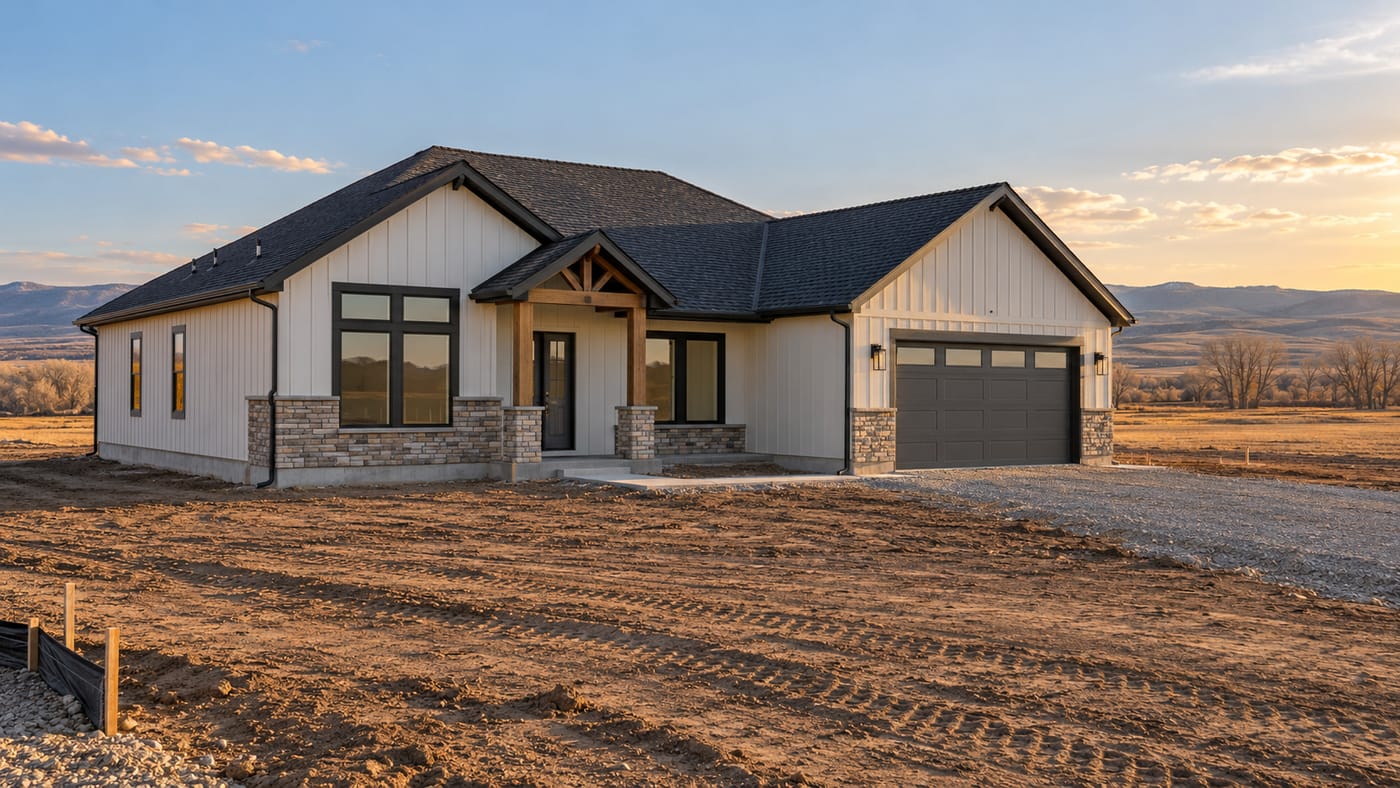
What people miss is that the Certificate of Occupancy is a separate document issued afterward, and that it is the thing that legally lets you live there.
The City of Twin Falls states that Certificates of Occupancy are signed, processed, and issued in the order received, and that processing "could take up to 3 business days."
Three business days is not a disaster. It is a disaster if you scheduled the movers for the morning after the final, gave notice on your rental for the last day of the month, and have a truck sitting in the driveway with nowhere legal to unload.
The City's residential new home permit requirements put it plainly: no occupancy is allowed until the Certificate of Occupancy is issued.
So the date that matters for your life is not the inspection date. It is the inspection date plus processing, plus whatever correction time happens in between.
The $1,000 door
There is an escape hatch, and it is priced like one.
The same City document provides that a temporary Certificate of Occupancy may be issued for certain incomplete work under extenuating circumstances, for a $1,000 refundable fee.
A few things worth understanding about that.
It is refundable, so it functions as a deposit against you actually finishing rather than as a penalty. It is for certain incomplete work under extenuating circumstances, which means it is a judgment call by the building official and not a product you purchase on demand. And a thousand dollars is deliberately large enough that nobody treats it as a routine step.
The usual reason people need one is weather. Final grading, driveway paving, and landscaping are the items most likely to be unfinishable in December, and they are also the items least likely to make a house unsafe to live in. That is the gap a temporary C of O exists to cover.
If your build is finishing in winter, ask your builder about this early rather than discovering it the week you need it.
Everything that has to clear first
The building final is the last inspection, not the first one at the end.
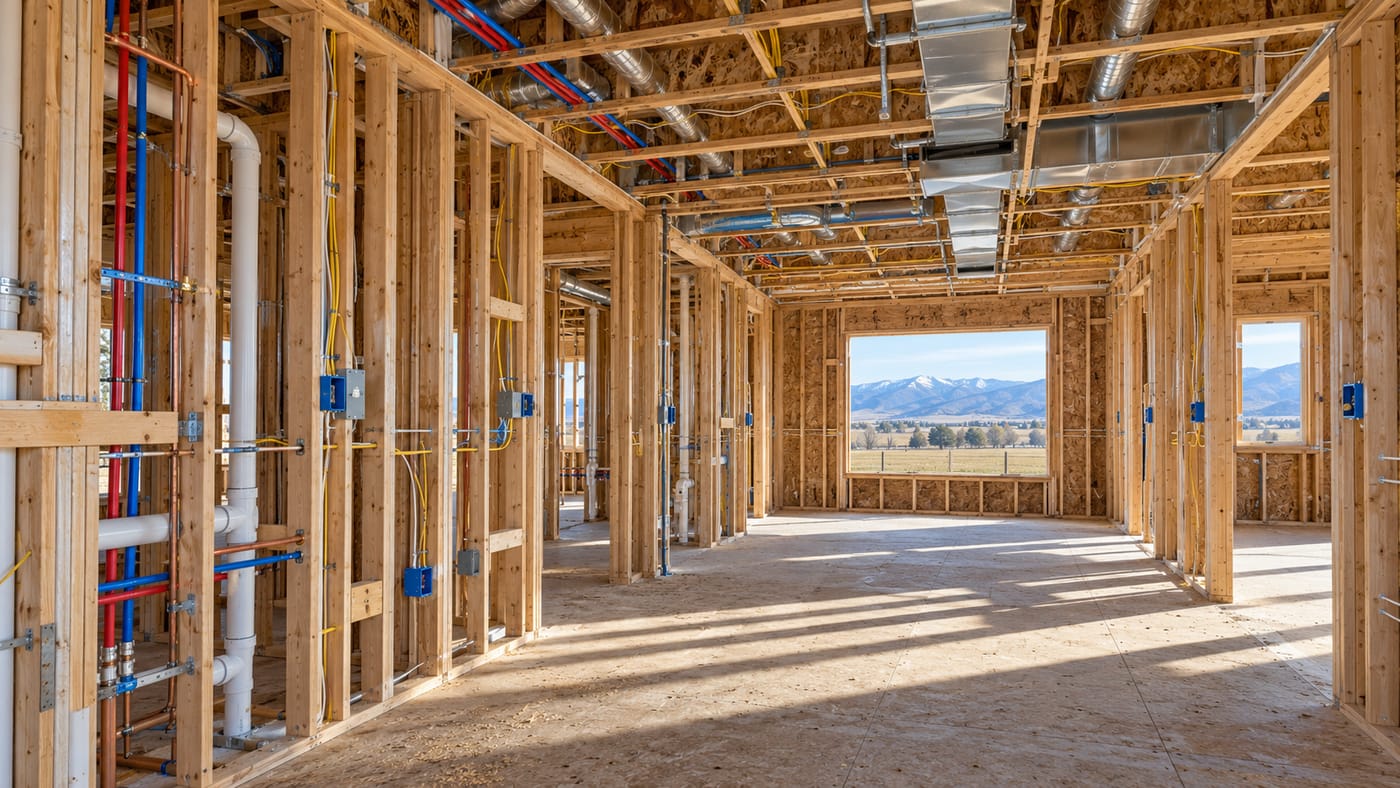
Inside the City of Twin Falls, the published sequence runs: rough-in inspections, framing, concrete inspections along the way, then final inspections for mechanical, electrical, plumbing, firewall, and fire sprinklers, each complete and signed off, and only then the building final, followed by the Certificate of Occupancy.
In unincorporated Twin Falls County, the structure is different in an important way. The County requires that before the final building inspection, the finals for plumbing, electrical, gas, mechanical, fireplace, and firewall or sprinkler systems be completed and signed off by the State of Idaho on the construction card.
That difference matters. In the City, the City inspects each trade. Outside city limits, the State does, and their signatures have to land on your card before the County will do the building final. Two governments, one card, and your move-in date on the other end of it.
It is the same gate we wrote about at framing, appearing again at the end of the job.
Different jurisdiction, different phone book
Worth having in one place, because people call the wrong number constantly.
City of Twin Falls:
Inspection | Number |
|---|---|
Building inspection | (208) 735-7333 |
Building department office | (208) 735-7238 |
Plumbing | (208) 735-7299 |
Mechanical | (208) 735-7289 |
Electrical | (208) 735-7235 |
Engineering | (208) 735-3446 |
Fire department | (208) 735-7338 |
Planning and zoning | (208) 735-7267 |
Unincorporated Twin Falls County:
Inspection | Number |
|---|---|
Building inspection | (208) 735-4429 |
Mechanical inspection | (208) 735-4432 |
Not one of those numbers is shared between the two. If your parcel is near the edge of town, confirming which jurisdiction you are in is not a formality.
Scheduling, and the cutoffs that cost days
City of Twin Falls. Inspections scheduled through the portal by 7:00 AM are same-day. Requests called in after midnight are scheduled for the next business day. Inspections ordinarily happen 8:00 AM to 4:00 PM, excluding holidays. Concrete inspections run in AM and PM windows, with the AM window requiring you to be ready by 8:00 and the PM window by noon.
Twin Falls County. Requests made after 7:00 AM are scheduled for the next working day, with inspections running roughly 9:30 AM to 4:00 PM.
Either way, have the permit number, property address, contact name and phone, and inspection type ready. The City notes that incomplete requests may not be scheduled at all.
The re-inspection fee, and what it actually penalizes
The City charges a $50 re-inspection fee, and the condition attached to it is the interesting part: it applies only when an inspection has failed more than once for the same issue, and it has to be paid before the re-inspection can be scheduled.
Read that as what it is. Failing once is treated as normal. Failing twice for the same reason is treated as not paying attention. That is a reasonable line, and it tells you something about how to handle a failed final: fix the actual cited item completely, not approximately.
If the inspector does not come
Idaho's building code act gives permit holders a remedy, and it applies at the end of the job as much as the beginning.
If a requested inspection is not performed within 48 business hours, the permit holder is authorized to hire a third-party inspector, with notice to the jurisdiction and the results provided, and is refunded any fee paid for that inspection. And if an inspection fails and the inspector does not provide a reason within three business days, the jurisdiction must refund 10 percent of the inspection fee.
Again, this is not a card to play lightly. It is worth knowing it exists.
The other 180 day clock
One more thing that catches projects that drag.
The City's permit requirements state that permits expire 180 days after issuance or after the last inspection, and may require reactivation. Applications expire 180 days after receipt.
For most builds this never comes up. It comes up on projects that stall, on owner-builder jobs that run slowly, and on anything that goes quiet over a winter. If there has been no inspection activity in six months, the permit is the thing to check before anyone picks the work back up.
How to plan the end of your build
Practical advice, which is mostly about buffers.
Do not give notice on your housing based on the final inspection date. Base it on the C of O, and add days. Between correction items, processing, and the chance of a failed final, a week of slack is not pessimistic.
Ask for the trade final schedule two weeks out. Each trade has to be complete and signed off before the building final can even be requested. Outside city limits, the state's schedule is in that chain too.
Walk the house yourself before the final. The same logic as the framing walkthrough. The inspector is checking code compliance, not whether your house is finished to your satisfaction. Those are different lists, and the punch list is yours.
Separate the punch list from the C of O. A punch list is between you and your builder. The C of O is between your builder and the building department. A house can be legally occupiable with twenty items still on the punch list, and it can also be punch-list-complete and not yet legally occupiable. Do not conflate them.
If you are finishing in winter, raise the temporary C of O question early. Grading, driveway, and landscaping are the usual stragglers, and they are the usual reason a temporary certificate gets discussed.
What to ask your builder
- When is the building final, and when do you expect the C of O to actually be in hand?
- Are all trade finals scheduled, and who is chasing the sign-offs?
- Is my parcel City or County, and which inspection process applies?
- If something cannot be finished because of weather, is a temporary C of O realistic here?
- When do I do my punch list walkthrough, and how is it tracked?
- What is the plan if the final fails?
- How much buffer should I leave before giving notice on my current housing?
Question seven is the one to ask first, and the honest answer from a builder who has done this a lot is usually more days than you want to hear.
Finishing a build in the Magic Valley?
We build custom homes, additions, ADUs, shops, and remodels across Twin Falls, Jerome, Kimberly, Buhl, Filer, Burley, Rupert, and unincorporated Twin Falls County.
We will tell you which jurisdiction you are in, when the trade finals are scheduled, and how much buffer to leave between the final inspection and your moving truck. If the weather is going to leave something unfinished, we will raise the temporary C of O conversation before it becomes urgent rather than after.
We are a registered Idaho contractor, RCE-65510, insured and warrantied.
Tell us about your project → or call (208) 731-1729
Fees, phone numbers, processing times, and inspection sequences above are published by the City of Twin Falls and Twin Falls County and are current as of this writing. Both change. Confirm with the department issuing your permit, and note that the City and the County operate entirely separate processes.
Frequently asked questions
What is a Certificate of Occupancy? The document that legally allows a building to be occupied. It is issued after the building final passes, and it is a separate step from the inspection itself.
Can I move in as soon as the final inspection passes? No. The City of Twin Falls allows no occupancy until the Certificate of Occupancy is issued, and processing is done in the order received and could take up to 3 business days.
What is a temporary Certificate of Occupancy and what does it cost? The City may issue one for certain incomplete work under extenuating circumstances, for a $1,000 refundable fee. It is a judgment call by the building official, not something available on request, and it typically comes up when weather prevents finishing items like grading or paving.
What has to be done before the building final? All trade finals. In the City: mechanical, electrical, plumbing, firewall, and fire sprinklers, each complete and signed off. In unincorporated Twin Falls County: plumbing, electrical, gas, mechanical, fireplace, and firewall or sprinkler systems, signed off by the State of Idaho on the construction card.
Why does the State sign off in the county but not in the city? The City has its own inspectors for each trade. Outside city limits, trade inspections run through the state, and those signatures go on the same construction card the County uses for the building final.
What is the re-inspection fee? The City charges $50, but only when an inspection has failed more than once for the same issue, and it must be paid before the re-inspection is scheduled.
How do I schedule a final inspection? City: through the portal by 7:00 AM for same-day, or by phone, with building inspections at (208) 735-7333. County: call (208) 735-4429, and requests after 7:00 AM go to the next working day. Have your permit number, address, contact information, and inspection type ready.
Is the punch list the same as the Certificate of Occupancy? No. The punch list is between you and your builder. The C of O is between your builder and the building department. A house can be legally occupiable with items still on the punch list.
What if the inspector does not show up? Idaho's building code act provides that if a requested inspection is not performed within 48 business hours, the permit holder may hire a third-party inspector and is refunded the inspection fee.
Can my permit expire before I finish? Yes. The City's requirements state that permits expire 180 days after issuance or after the last inspection and may require reactivation. It is a real issue on stalled projects.
How much buffer should I leave before moving in? More than the three business days of processing. Leave room for correction items and the possibility of a failed final. A week of slack between your expected C of O and your moving date is reasonable.