Short answer: if you are only changing finishes, usually no. If you are moving anything, almost certainly yes.
That line is cleaner than most people expect, and it comes straight out of the code the City uses.
The dividing line
The City of Twin Falls determines exemptions using section R105.2 of the 2018 IRC, and item six on that list is the one that governs most remodels. Exempt work includes:
painting, papering, tiling, carpeting, cabinets, counter tops and similar finish work
That is the whole exemption for interior remodeling. Surfaces and the things that sit on them.
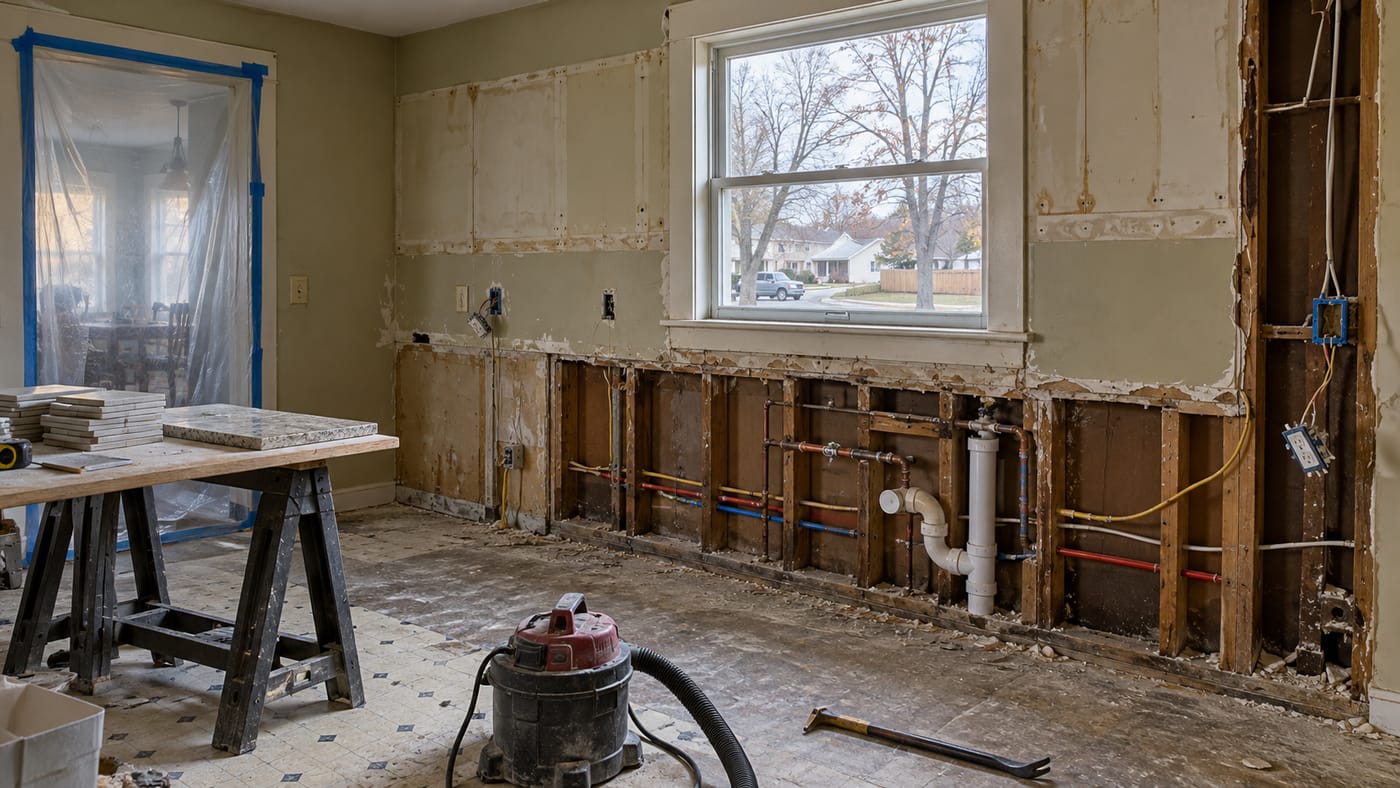
Everything structural, electrical, plumbing, or mechanical is on the other side of the line. The City states it plainly: "All electrical, plumbing, mechanical and gas work must be permitted." No square footage threshold, no minor-work carve-out.
A kitchen remodel, sorted
Usually no permit:
- New cabinets in the same locations
- New countertops
- New backsplash tile
- New flooring
- Paint
- Swapping an appliance into the same spot with the same connections
Permit:
- Moving the sink, the range, or the dishwasher
- Adding outlets or circuits
- Adding or relocating a gas line for a range
- Adding or moving a range hood duct
- Removing or moving a wall
- Changing a window
A kitchen where everything stays where it is and only the surfaces change is genuinely exempt work. A kitchen where the island gains a sink is not.
A bathroom remodel, and the plumbing nuance
The plumbing exemptions in R105.2 are narrower than people assume, and worth reading carefully.
Exempt: clearing stoppages, repairing leaks in pipes, valves or fixtures, and removing and reinstalling water closets, but only "provided no valves, pipes or fixtures are replaced or rearranged."
And a line that catches people: when stopping a leak requires replacing a concealed trap or pipe with new material, that is "considered as new work" and requires a permit and inspection.
So pulling your toilet to tile under it and setting it back is exempt. Moving that toilet three feet is not. Replacing a concealed drain line because it failed is not, even though it started as a repair.
Tile, vanity, mirror, paint, and a new toilet in the same location land on the exempt side. A tub-to-shower conversion that moves the drain does not.
What surprises people
New windows require a permit. The City lists "most alterations, including new built-up roofs/trusses, new windows, etc." as requiring permits. A straight window replacement is not finish work.
Reroofing does not. The City names interior wall paint, reroofing, and replacing carpet as examples of work that does not need a permit. New trusses or a built-up roof assembly is a different matter.
Starting a business in your home requires a permit. Not a remodel exactly, but it catches people converting a bedroom into something else.
The historic district adds a step. In the historical preservation district you have to appear before the commission before a permit can be issued.
What is exempt that you might not expect
From the same R105.2 list, and useful for anyone planning outdoor work alongside a remodel:
Exempt | The threshold |
|---|---|
Detached accessory structures | one story, 200 sq ft or less |
Fences | not over 7 feet high |
Retaining walls | not over 4 feet, footing bottom to wall top, unless supporting a surcharge |
Decks | 200 sq ft or less, no more than 30 inches above grade, not attached to a dwelling, and not serving the required exit door |
Prefabricated pools | less than 24 inches deep |
Sidewalks and driveways | |
Window awnings | projecting no more than 54 inches |
Read the deck row twice. Three conditions, and the deck most people want fails at least one of them. Attached to the house means a permit, at any size.
Exempt does not mean allowed
This is the part worth internalizing.
The City states that "exemption from permit requirements shall not be deemed to grant authorization" for work that violates city, state, or other adopted codes.
In plain terms: not needing a permit does not mean the work can be done any way you like. The code still applies. Egress, fire blocking, clearances, and electrical safety requirements do not switch off because nobody is coming to inspect. They just stop being verified by anyone but you.
Why skipping it costs more than it saves
The permit is rarely the expensive part. The consequences are.
Unpermitted work tends to surface at the worst time, which is when you sell. A buyer's inspector finds a bathroom that is not on the county record, or an appraiser notes finished square footage that was never permitted, and now you are negotiating about it with a closing date. Retroactive permitting is possible in many cases, and it is not pleasant, because the work has to be opened up for inspection.
There is also the insurance question, which is worth raising with your carrier rather than with a builder.
If you are outside city limits
The requirements above are the City of Twin Falls. Unincorporated Twin Falls County runs its own building department with its own process and its own phone numbers, and outside city limits the State of Idaho handles the trade inspections.
Same principle applies, but confirm the specifics with the department that will issue your permit rather than assuming the City's list carries over.
Just call and ask
The simplest advice in this post. The City says anyone unsure whether work needs a permit should call the Building Safety Department at (208) 735-7238 before construction starts, and the department offers consultation inspections to all customers, including homeowners.
That is a free phone call that settles the question in five minutes.
What to ask your builder
- Which parts of this scope need a permit, and who is pulling it?
- Is anything in this remodel moving plumbing, electrical, or a wall?
- Are we changing any windows?
- Is there existing unpermitted work here that we are about to uncover?
- If we are outside city limits, who inspects the trades?
Question four is worth asking before demolition, not after.
Remodeling in the Magic Valley?
We build custom homes, additions, ADUs, shops, and remodels across Twin Falls, Jerome, Kimberly, Buhl, Filer, Burley, Rupert, and unincorporated Twin Falls County.
We will tell you which parts of your project need a permit before you commit to a scope, pull the permits ourselves, and tell you plainly when something you are planning crosses the line from finish work into permitted work.
We are a registered Idaho contractor, RCE-65510, insured and warrantied.
Tell us about your project → or call (208) 731-1729
Permit requirements and exemptions above are published by the City of Twin Falls and are current as of this writing. The exemption list is reproduced from IRC section R105.2 using a published reference; Idaho enforces the 2018 edition with state amendments, so confirm the current list with the department issuing your permit. Unincorporated Twin Falls County and other cities operate their own processes.
Frequently asked questions
Do I need a permit to remodel a kitchen in Twin Falls? Not for finish work alone. Cabinets, countertops, tile, flooring, and paint are exempt under R105.2. Moving the sink, adding circuits, relocating gas, or changing a window all require permits.
Do I need a permit to remodel a bathroom? Same rule. New tile, vanity, and a toilet in the same location are finish work. Moving a fixture, replacing concealed pipe, or adding electrical requires a permit. Note that removing and reinstalling a water closet is exempt only when no valves, pipes, or fixtures are replaced or rearranged.
Do I need a permit to replace windows? In the City of Twin Falls, yes. New windows are listed among the alterations that require permits.
Do I need a permit for a deck? Only exempt if it is 200 square feet or less, no more than 30 inches above grade at any point, not attached to the dwelling, and not serving the required exit door. Attached decks require a permit regardless of size.
What if the work is exempt? The code still applies. The City states that exemption from permit requirements does not authorize work that violates any adopted code. You are simply not being inspected.
What happens if I skip the permit? It usually surfaces at sale, when a buyer's inspector or appraiser finds work that is not on record. Retroactive permitting often means opening the work back up for inspection.
How do I find out for sure? Call the City of Twin Falls Building Safety Department at (208) 735-7238 before you start. They also offer consultation inspections to homeowners.