TL;DR
- An allowance is a placeholder, not a price. It's a budgeted guess for something you haven't picked yet, and you pay the difference if your actual selection costs more.
- The single most important question: does the allowance cover materials only, or materials and labor? Most cover materials only. Homeowners almost always assume otherwise.
- Lowball allowances are how a bid gets won. Setting them unrealistically low makes an estimate look competitive and pushes the real cost into change orders later.
- Too many allowances is itself a red flag. It can mean a builder doesn't want to commit to a fixed price, which moves the risk for that portion of the job onto you.
- Ask whether you get a credit if you come in under. Not every contract says you do.
- Allowances and contingencies are different things. An allowance covers a known item at an unknown price. A contingency covers unknown problems.
- Exclusions are a separate trap. Those aren't budgeted at all, and they're usually listed in the part of the document nobody reads.
- Get selections documented and signed off before anything is ordered. That's where disputes come from.
Here's a conversation I'd rather have before a contract is signed than during drywall.
You budgeted $5,000 for lighting. You go to the showroom, pick fixtures you actually like for the house you're spending a year of your life building, and the total comes to $12,000. Nobody did anything wrong. Nobody lied to you. And you're still $7,000 over.
That's an allowance doing exactly what an allowance does. Understanding how they work is probably the highest-value hour a homeowner can spend before signing anything.
What an allowance actually is
An allowance is a dollar amount included in an estimate as the anticipated cost of something that hasn't been finalized yet. It's a placeholder so the project can move forward before every selection has been made.
They exist for a legitimate reason. You cannot pre-select every item in a custom home or a substantial remodel before construction starts, and waiting until you have would delay the project by months. So the builder budgets a realistic number, you make your choices as the schedule requires them, and the difference gets reconciled.
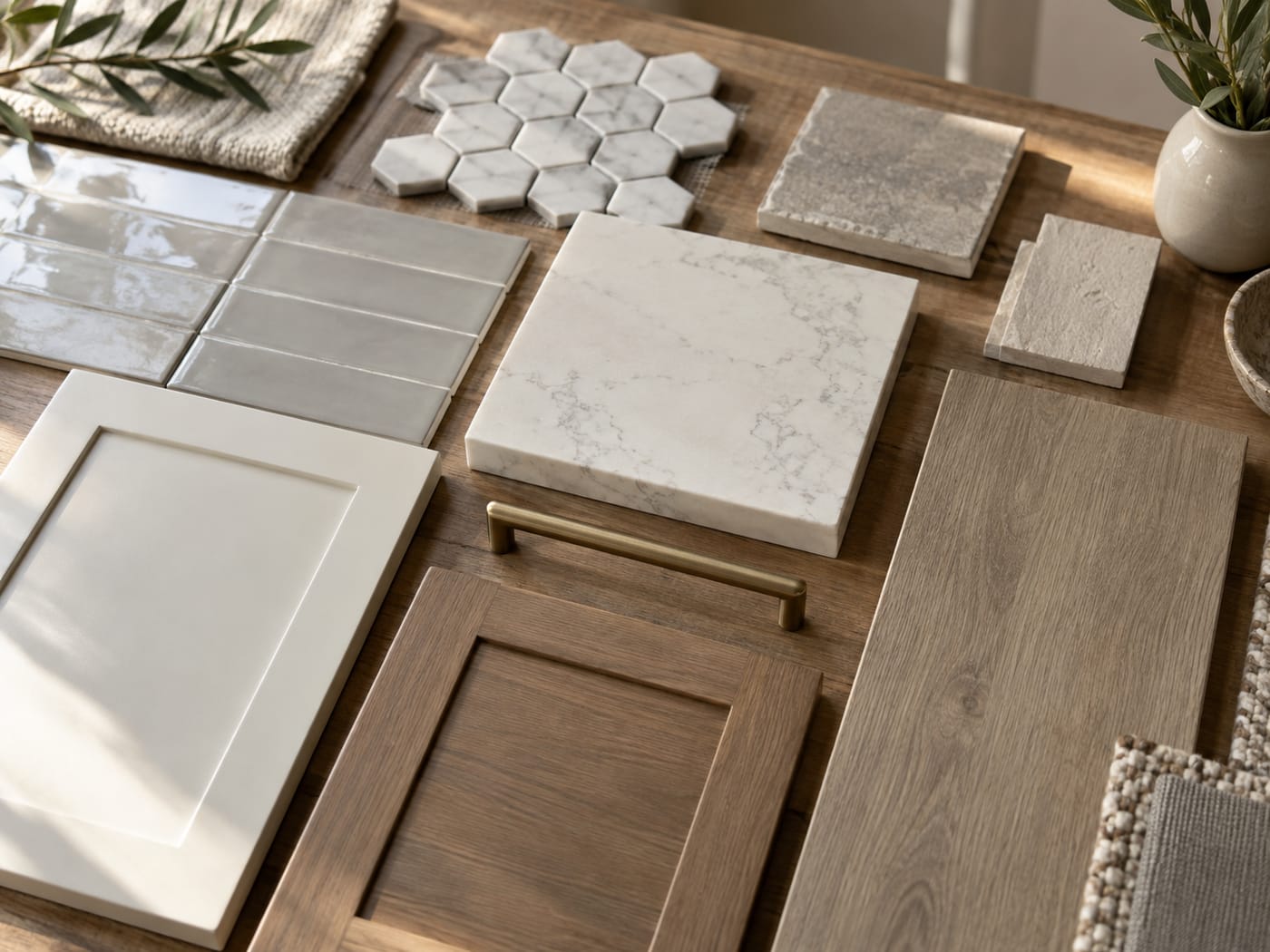
Items that are commonly allowances:
- Cabinetry
- Countertops
- Flooring
- Tile
- Lighting fixtures
- Plumbing fixtures
- Appliances
- Door hardware and trim details
Items that are usually fixed, not allowances: labor, demolition, framing, permits, and anything already specified in the plans.
There's a second category worth knowing about. Builders sometimes set allowances for work they aren't confident pricing, rather than for selections you haven't made. Rock excavation, well drilling, and repair of hidden water or insect damage in a remodel are the classic examples. Those matter a great deal around here, where a rural parcel might need a well and where nobody knows what's behind the walls of a 1960s house until it's open.
The one question that matters most
Does this allowance cover materials only, or materials and labor?
Ask it about every single allowance line, and get the answer in writing.
Most allowances are materials-only, and industry guidance says that's the right way to use them. But homeowners overwhelmingly read a "$9,000 cabinet allowance" as "cabinets, installed, done." If it's materials only, installation is a separate line, and if you assumed otherwise you've just discovered a gap in your budget at the worst possible moment.
The same applies to tile, where installation frequently costs more than the tile. Published figures put tile material anywhere from roughly $3 to more than $10 per square foot, with installation adding somewhere in the range of $8 to $20 per square foot depending on pattern complexity and waterproofing. If your allowance covers only the first number, the second one is still coming.
This isn't a trick question. Plenty of builders handle it clearly. But the ones who don't rely on you not asking.
How allowances get abused
I'd rather be direct about this, because it's the most common way a homeowner ends up feeling misled by someone who never technically lied.
Industry guidance on this is blunt. Builders competing for work sometimes specify inappropriately low allowance amounts for cabinetry, countertops, flooring, appliances, and trim in order to produce a winning bid. Inadequate allowances, and too many of them, are recognized as common causes of cost overruns, and they get abused either by intentionally underpricing to keep a bid unrealistically low, or to paper over sloppy and incomplete estimating.
Think about what that does to a bid comparison. Three builders quote your project. Two set a realistic $12,000 cabinet allowance. One sets $6,000. That builder's bottom line is $6,000 lower and looks like the better deal, and the difference is entirely fictional. You'll pay it later, through a change order, when you're already committed and have no leverage.
This is why comparing bottom-line numbers between bids is close to meaningless unless you've compared the allowance schedules line by line.
There's a related pattern worth watching for. Some contractors use allowances, or a cost-plus provision, simply because they don't want to give a fixed price for a portion of the work. That places the risk of overruns on you for that entire portion. Sometimes that's honest and appropriate, like an allowance for well drilling where depth genuinely can't be known. Sometimes it's a way of avoiding commitment on something that could have been priced.
The test is whether the builder can explain why a specific item couldn't be fixed-priced. A good answer is specific. A vague one is a warning.
Do you get money back if you come in under?
Ask this explicitly, because contracts vary and the answer is not always yes.
If your cabinet allowance is $9,000 and you choose something at $8,000, does that $1,000 come back to you as a credit, or does it stay with the builder? A well-written contract says. A vague one leaves it ambiguous, and ambiguity in a contract rarely resolves in the homeowner's favor.
Related: how is the difference handled procedurally when you go over? Through a change order, or adjusted against the allowance line? Who initiates the purchase, you or the builder? And are selections documented and signed off before anything gets ordered?
That last one prevents the most common allowance dispute, which is a disagreement about what was actually selected and what it cost. Guidance on contract drafting consistently recommends that allowance descriptions define each item and its scope, that reconciliation procedures spell out how differences are handled, that selections and costs be documented and signed before procurement, and that the contract state which party initiates purchases.
If your contract doesn't address those four things, that's worth raising before you sign.
Allowances versus contingencies
These get used interchangeably and they're not the same thing.
An allowance covers a known item whose price isn't settled. You know you need countertops. You haven't chosen which.
A contingency covers unknown problems. Something behind a wall, a soil condition, a surprise in an existing structure. It's money set aside for things nobody can list in advance.
The distinction matters because they fail differently. A blown allowance means you upgraded, and you chose that. A blown contingency means the project found something, and you didn't choose anything.
A builder with no contingency on a remodel either hasn't thought hard about the work, or intends to handle every surprise through a change order. Neither is good. Ask which, and ask what the number is based on.
The other gap: exclusions
Allowances at least appear in your budget. Exclusions don't.
An exclusion is work that's explicitly not part of the contract. It's usually listed, often in a section near the back, and it's where a surprising amount of money hides. Common ones in this area:
- Site work, grading, and drainage
- Driveways
- Utility trenching and connections, and distance to the nearest service point
- Well and septic
- Landscaping, irrigation, and fencing
- Design and structural engineering fees
- Permits and fees
- Window coverings
- Appliances, sometimes
- Removal of unsuitable soil or rock
None of those are unreasonable to exclude. All of them cost real money, and if you didn't know they weren't included, you have a hole in your budget that has nothing to do with your builder's pricing.
Read the exclusions section before the price. It tells you more about the estimate than the total does.
What to ask before you sign
Six questions. They take ten minutes and they'll tell you more than any bottom-line number.
"Can I see the full allowance schedule, line by line?" Every allowance item with its amount. If there's no schedule, that's the answer to your next several questions.
"Which allowances are materials-only and which include labor?" In writing, per line.
"How did you arrive at these numbers?" A builder who set realistic allowances can tell you what they're based on. One who set them to win the bid will be vague.
"What happens if I come in under? What happens if I go over?" Credits, change orders, and the procedure for each.
"What's excluded entirely?" Then go through the list above and ask about anything not mentioned.
"Why is this item an allowance instead of a fixed price?" Especially for anything large. There are good answers. Listen for whether you get one.
And one for comparing bids: ask every builder for the same allowance amounts. If you tell all three to use a $12,000 cabinet allowance, their bottom lines become genuinely comparable. Right now they probably aren't.
How we handle it
We use allowances, because everyone building custom work does. What we try to do differently is set them at numbers you'd actually spend rather than numbers that make our estimate look good.
That sometimes means our total comes in higher than someone else's. I'd rather explain that up front than have the conversation in month five, when you're standing in a lighting showroom finding out what your budget really was.
You get the allowance schedule itemized, with what each covers and whether labor is included. You get to see where we've accounted for unknowns instead of having them buried. And if you want to compare us against another bid, tell us their allowance numbers and we'll price the same assumptions so you're looking at a real comparison.
Want an estimate you can actually read?
We build custom homes, remodels, additions, ADUs, and barndominiums across Twin Falls, Jerome, Kimberly, Buhl, Filer, Burley, Rupert, and unincorporated Twin Falls County.
Tell us what you're planning. We'll walk your site, talk honestly about budget, and give you an itemized estimate with the allowance schedule spelled out, so you know what's a price and what's a placeholder.
We're a registered Idaho contractor, RCE-65510, insured and warrantied. One point of contact, start to finish.
Request a consultation → or call (208) 731-1729
Frequently asked questions
What is a construction allowance? A dollar amount included in an estimate as a placeholder for an item you haven't selected yet, like cabinets, tile, or lighting. If your final selection costs more, you pay the difference. If it costs less, you may get a credit, depending on what your contract says.
Does an allowance include installation? Usually not. Most allowances are materials-only, which is generally how they're meant to be used. Homeowners commonly assume installation is included. Ask about every line and get the answer in writing, because on items like tile the installation can cost more than the material.
Why is one builder's bid so much lower? Check the allowance schedules before you assume it's a better deal. A builder who sets a $6,000 cabinet allowance where others set $12,000 has a bid that looks $6,000 cheaper and isn't. Comparing bottom lines without comparing allowances tells you very little.
Is it normal to have a lot of allowances? Some are normal and necessary. A lot of them is a flag. Industry guidance treats excessive allowances as a common cause of overruns, and sometimes it signals a builder who doesn't want to commit to a fixed price, which shifts the overrun risk to you for that part of the job.
Do I get money back if I spend less than the allowance? It depends on your contract. Ask directly, and make sure the answer is written down. Also ask how differences get processed, whether by credit, change order, or adjustment to the allowance line.
What's the difference between an allowance and a contingency? An allowance is for a known item at an unknown price, like countertops you haven't chosen. A contingency is for unknown problems, like whatever is behind the wall in a 1970s remodel. They're both legitimate and they cover different risks.
What should be in my contract about allowances? At minimum: a clear description and scope for each allowance, a stated procedure for reconciling differences, a requirement that selections and costs be documented and signed off before anything is ordered, and clarity about which party initiates purchases.
What's usually excluded from a bid entirely? Frequently site work, driveways, utility trenching and connections, well and septic, landscaping, engineering and design fees, permits, and window coverings. Read the exclusions section before you read the price.
Can I just ask for a fixed price on everything? Sometimes, if your selections are finalized before contracting. That means choosing your cabinets, tile, fixtures, and appliances up front, which takes time but removes most allowance risk. It's a real option and worth asking about if budget certainty matters more to you than starting quickly.
How do I compare bids fairly? Give every builder the same allowance numbers and ask them to price against those. Then compare. Without that, you're comparing different assumptions and calling it a price comparison.
Sources: Published industry guidance on construction allowances, contract drafting, and cost overrun causes, accessed September 2026. Cost ranges cited are third-party published figures, not Bolton Built quotes.